What is the Pelvic Floor Anyway? (And Why It Matters)
Jul 01, 2026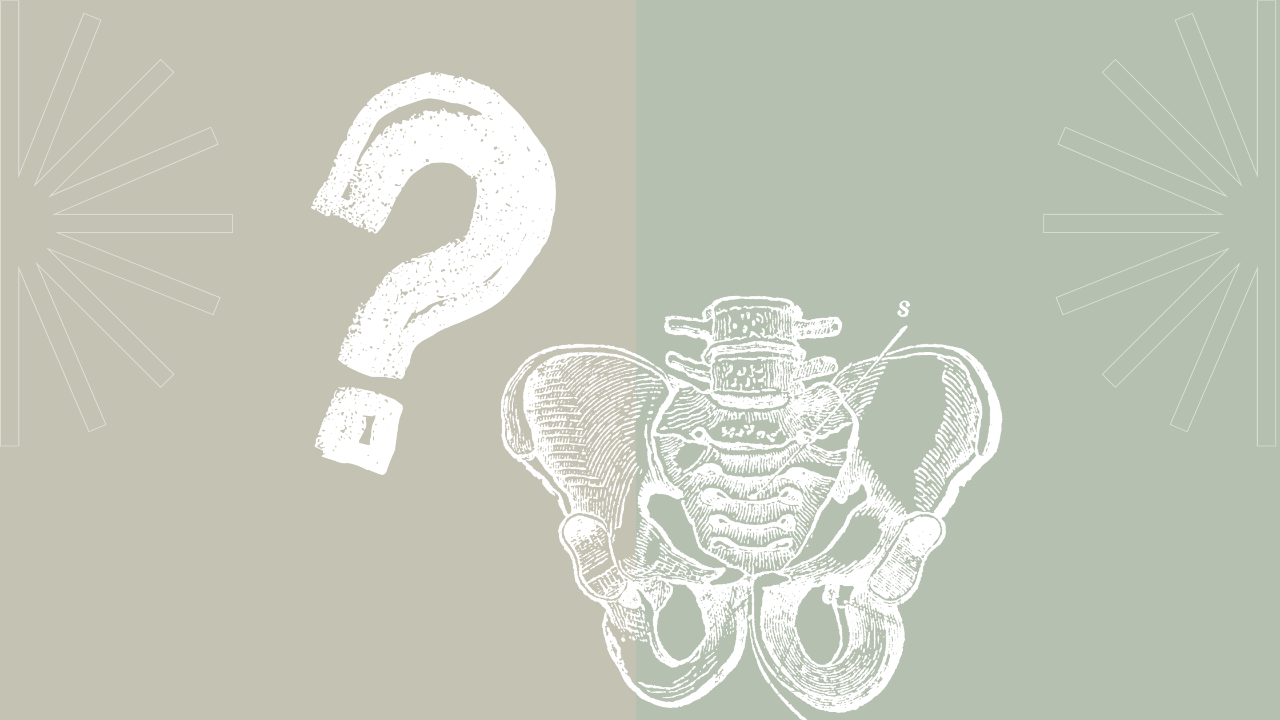
Ladies, I want you to imagine yourself at home today. You are standing in the nursery, rocking your baby to sleep, when a sudden sneeze catches you off guard. In an instant, you feel that familiar, frustrating leak. Or maybe you are standing at the kitchen sink cleaning dishes after a dinner with your toddler and you notice a heavy, dragging sensation by the end of the day, as if your internal organs are working against gravity. You might find yourself staring in the mirror, wondering why your body feels so fundamentally different, even though your doctor gave you the standard medical clearance weeks ago via the classic “You’re good, you can get back to exercising.”
First, take a deep breath and let’s try to center your nervous system. What you are experiencing is an incredibly common part of the early motherhood journey, but it does not have to be your permanent baseline nor do I want you to consider this to be normal. Your body has gone through a massive structural transformation, and the key to feeling strong, connected, and secure in your movement again starts with understanding a deeply vital, yet often overlooked, group of muscles: your pelvic floor.
Think of your pelvic floor as a dynamic, muscular hammock. It stretches from your pubic bone in the front all the way to your tailbone in the back, and sits at the very base of your torso. It is an essential component of your daily function- from your role as a mother, a wife, a woman- your pelvic floor is essential to each role that you fulfill on a daily visit.
This hammock has five essential jobs in your daily life:
- Support: It acts as the structural foundation for your pelvic organs, including your bladder, uterus, and bowel.
- Sphincter Function: It wraps around the openings of these organs, giving you the control to wrap up a workout or a laugh without worrying about leaks.
- Stability: It works directly with your deep core, diaphragm, and back muscles to stabilize your spine and pelvis every time you lift your baby, carry a car seat, or push a stroller.
- Sexual Health: These muscles coordinate circulation for arousal and must relax for pain-free intimacy, while their rhythmic movement is key to sexual satisfaction and function.
- Sump Pump (Circulation): Its steady movement acts as a natural pump, moving blood and lymphatic fluid back up from your legs and within the pelvis itself to prevent fluid from pooling.
During pregnancy, this muscular hammock carries ever-increasing weight for nine months, stretching and lengthening under the influence of hormonal changes. Whether you had a vaginal delivery or a C-section, these muscles experience significant strain and temporary neurological changes. Postpartum core retraining isn't about rushing to get a flat stomach; it is about restoring the baseline structural integrity of this foundational hammock so it can support you through the physical demands of parenting.
Clinical Pearl: Your pelvic floor does not work in a vacuum. It is the bottom anchor of a pressure system that includes your diaphragm at the top and your abdominal wall at the front. Healing requires coordinating these pieces together, not just doing isolated squeezes.
How to Reconnect with Your Foundation at Home
Before diving into complex postpartum pelvic floor exercises, the most effective first step is rebuilding awareness and coordination. Here is a simple, low-barrier strategy you can try today to begin waking up these deep muscles safely.
Step 1: Find Restorative Alignment
Sit comfortably on a firm chair with your feet flat on the floor, or lie on your back with your knees bent. Allow your ribs to stack directly over your pelvis, avoiding the temptation to tuck your tailbone under or excessively arch your lower back. Let your belly soften completely.
Step 2: Practice the 360-Degree Breath
Place your hands around the lower borders of your ribcage. As you inhale slowly through your nose, visualize your ribs expanding outward into your hands like an umbrella opening in 360 degrees. As the air moves down, picture your pelvic floor hammock gently lengthening and relaxing downward. Do not push; simply allow the space to open.
Step 3: Gentle Coordination on the Exhale
As you begin a slow, relaxed exhale through your mouth, feel your ribcage naturally drop down and inward. At the exact same time, visualize gently drawing the four corners of your pelvic floor hammock up and in, as if lightly lifting a blueberry with your muscles. Keep your glutes, jaw, and thighs completely relaxed. Don’t think of maximally squeezing your pelvic floor, this muscle recruitment should be light and reflexive.
Knowing When to Seek Individualized Care
While retraining your breathing coordination is an excellent, safe starting point for tissue healing, every birth story and physical recovery timeline is completely unique. Self-care strategies are highly valuable, but they cannot replace individual clinical evaluation if your system needs specific, targeted adaptations.
It is time to look past generalized online advice and seek professional assessment if you notice any of the following indicators:
- Consistent urinary leaking when coughing, laughing, running, or lifting your child.
- A persistent feeling of heaviness, bulging, or dragging in your pelvic region.
- Pain during intimacy, or discomfort when using tampons/menstrual cups or pelvic exams.
- Ongoing pelvic girdle, hip, or lower back pain that does not improve with rest.
An individualized evaluation analyzes exactly how your unique core pressure system is managing daily loads, ensuring you get a precise roadmap back to the activities you love without the guesswork.
Take the Next Step in Your Recovery
True recovery takes time, patience, and the right structural support. You do not have to navigate the complexities of postpartum healing alone or settle for symptoms that limit your daily life.
Ready to rebuild your strength from the inside out? Grab our Pelvic Floor 101 Guide in our store to access a guide on how to understand baseline pelvic floor essentials! Or fast-track your healing by booking a Pelvic Health Coaching Call or purchase our specialized 8-Week Vaginal or 12-Week C-Section Recovery Protocols to safely restore your function today.
Stay connected with news and updates!
Join our mailing list to receive the latest news and updates from our team.
Don't worry, your information will not be shared.
We hate SPAM. We will never sell your information, for any reason.